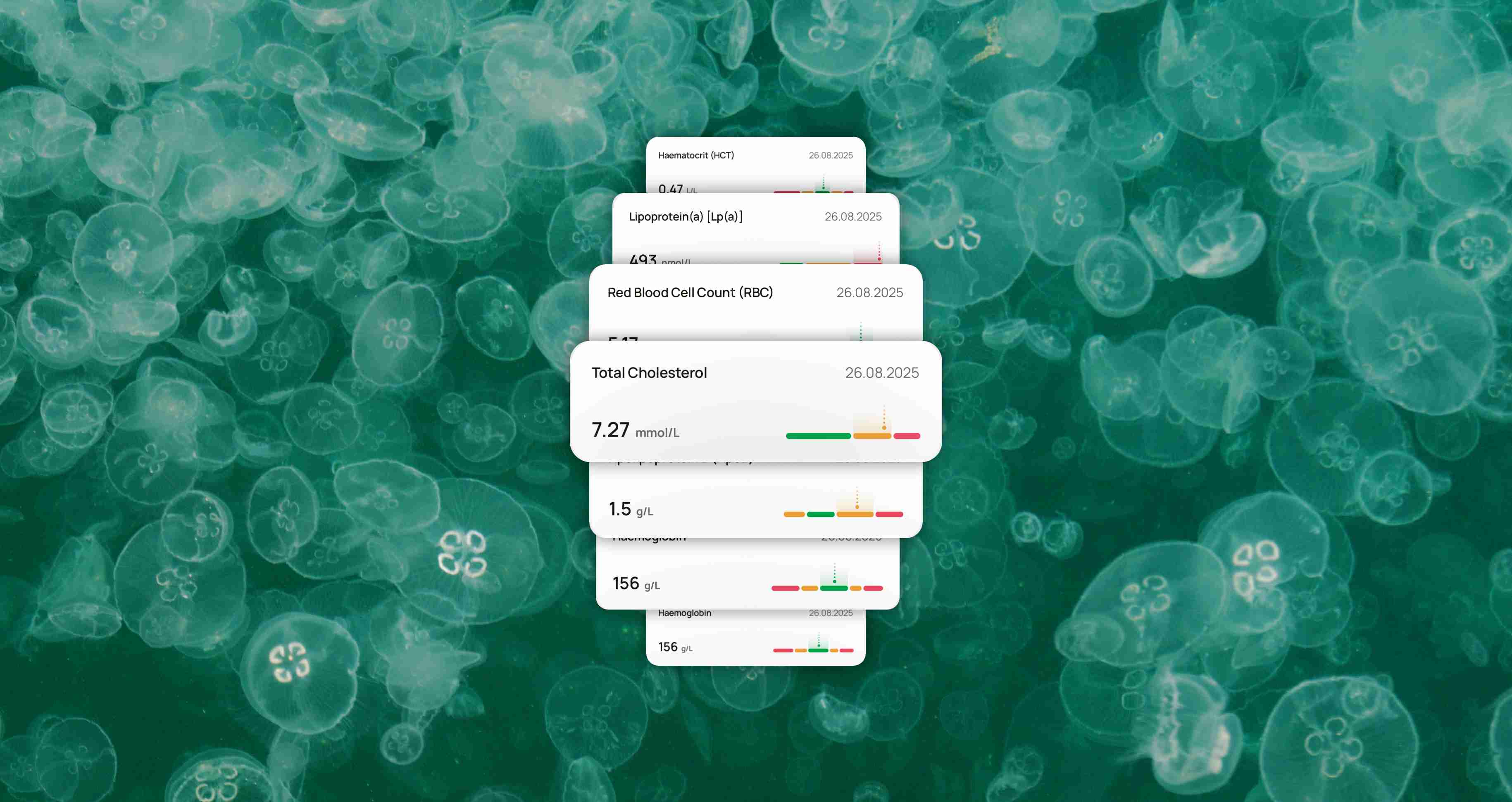
Your body is constantly sending signals about its health status. A biomarker is simply a quantifiable capture of that signal stream, such as specific proteins, hormones or enzymes that act as objective signposts for what is happening inside your cells. But in the era of big data, the challenge isn't capturing more information, it is capturing the right information.
The Epic BioSignature is built on the principle of high-value intelligence. That’s why we selected these 54 specific markers because they represent the most actionable levers for your long-term health. This includes critical indicators rarely found in standard medical screenings, such as Lp(a) for genetic heart risk or comprehensive thyroid panels, to ensure we measure your capacity for performance, not just the absence of disease.
This is where the data becomes useful. Your Health Intelligence Companion ingests these signals to construct a detailed and personal profile of your biology. By analysing how your metabolic health influences your hormones, or how inflammation impacts your heart, it transforms a static medical report into a dynamic guide for your daily life.

Your Epic BioSignature captures the 54 biomarkers that matter most
Cardiovascular Health Markers
ApoB
ApoB is the primary protein found on all "bad" cholesterol particles, including LDL, VLDL, and Lp(a).
Why it matters: It directly quantifies the total number of atherogenic (plaque-forming) particles in your bloodstream, offering a precise measure of cardiovascular risk.
Health impact: Lower ApoB levels signify fewer harmful particles, which helps reduce the risk of arterial plaque buildup and heart disease.
ApoA1
ApoA1 is the main protein component of "good" HDL cholesterol particles, crucial for reverse cholesterol transport.
Why it matters: It indicates the abundance of protective HDL particles that actively help remove excess cholesterol from your arteries.
Health impact: Higher ApoA1 levels are associated with better cholesterol removal capacity and a decreased risk of cardiovascular issues.
ApoB:ApoA1 Ratio
This ratio compares the total number of "bad" cholesterol particles (ApoB) to the number of "good" cholesterol particles (ApoA1).
Why it matters: It provides a powerful balance indicator between atherogenic and protective lipoproteins, serving as a strong predictor of cardiovascular risk.
Health impact: A lower ApoB:ApoA1 ratio suggests a more favourable lipid profile and a reduced likelihood of developing heart conditions.
Lipoprotein(a) [Lp(a)]
Lp(a) is a genetically determined, LDL-like cholesterol particle with an additional protein, apolipoprotein(a).
Why it matters: Elevated Lp(a) is an independent and often inherited risk factor for premature cardiovascular disease and aortic valve stenosis.
Health impact: Understanding your Lp(a) level helps assess a specific, often overlooked, genetic predisposition to heart disease.
Total Cholesterol
Total Cholesterol represents the sum of all cholesterol in your blood, encompassing LDL, HDL, and a portion of your triglycerides.
Why it matters: It offers a general overview of your cholesterol status, though it doesn't differentiate between the various cholesterol types.
Health impact: Maintaining a healthy total cholesterol level is a foundational step in managing overall cardiovascular risk.
LDL Cholesterol
LDL Cholesterol refers to the cholesterol carried within low-density lipoprotein particles, commonly known as "bad cholesterol."
Why it matters: High LDL-C levels contribute to plaque formation in arteries, significantly increasing the risk of heart disease and stroke.
Health impact: Keeping LDL-C in a healthy range protects your arteries and reduces the likelihood of cardiovascular events.
HDL Cholesterol
HDL Cholesterol is the cholesterol carried within high-density lipoprotein particles, often called "good cholesterol."
Why it matters: HDL helps remove excess cholesterol from your arteries and transports it back to the liver for excretion, offering a protective effect.
Health impact: Higher HDL-C levels are generally associated with a lower risk of heart disease due to its role in cholesterol removal.
Non-HDL Cholesterol
Non-HDL Cholesterol is calculated by subtracting HDL cholesterol from total cholesterol, representing all the "bad" cholesterol particles.
Why it matters: It is considered a more comprehensive predictor of cardiovascular risk than LDL-C alone, especially for individuals with high triglycerides.
Health impact: Lowering non-HDL cholesterol reduces the burden of atherogenic particles, thereby decreasing cardiovascular disease risk.
Triglycerides
Triglycerides are the most common type of fat in your body, serving as an energy source and stored in fat cells.
Why it matters: Elevated triglyceride levels are strongly linked to an increased risk of heart disease, stroke, and metabolic syndrome.
Health impact: Maintaining healthy triglyceride levels protects your heart and blood vessels from damage and inflammation.
Total Cholesterol/HDL Ratio
This ratio is derived by dividing your total cholesterol by your HDL cholesterol.
Why it matters: It offers a simple yet effective way to assess the balance between total cholesterol and its protective component, HDL.
Health impact: A lower Total Cholesterol/HDL ratio indicates a more favourable balance, suggesting a reduced risk of cardiovascular disease.
Blood Health
Haemoglobin (HGB)
Haemoglobin is the vital protein in red blood cells responsible for carrying oxygen throughout your body.
Why it matters: Its level directly reflects your blood's capacity to transport oxygen from the lungs to all tissues.
Health impact: Optimal haemoglobin ensures efficient oxygen delivery, supporting energy, vitality, and physical performance.
Haematocrit (HCT)
Haematocrit measures the percentage of your total blood volume that is made up of red blood cells.
Why it matters: This value indicates the proportion of oxygen-carrying cells relative to the fluid component of your blood.
Health impact: A balanced haematocrit level is crucial for proper blood flow and effective oxygen distribution.
Red Blood Cell Count (RBC)
The Red Blood Cell Count quantifies the total number of red blood cells present in a specific volume of your blood.
Why it matters: It provides a direct measure of your body's overall capacity for oxygen transport.
Health impact: An adequate RBC count is fundamental for sufficient oxygenation of all bodily systems.
Mean Corpuscular Volume (MCV)
MCV represents the average size of your individual red blood cells.
Why it matters: This metric helps in diagnosing and classifying different types of anaemia or other blood conditions.
Health impact: Normal MCV indicates red blood cells are appropriately sized for optimal function.
Mean Corpuscular Haemoglobin (MCH)
MCH measures the average amount of haemoglobin contained within each single red blood cell.
Why it matters: It reflects the oxygen-carrying content of an average red blood cell.
Health impact: Healthy MCH levels ensure each red blood cell is well-equipped to deliver oxygen.
Mean Corpuscular Haemoglobin Concentration (MCHC)
MCHC indicates the average concentration of haemoglobin within a given volume of red blood cells.
Why it matters: This value shows how densely packed the oxygen-carrying pigment is inside your red blood cells.
Health impact: Optimal MCHC ensures red blood cells are fully saturated with haemoglobin for efficient oxygen transport.
Red Cell Distribution Width (RDW)
RDW assesses the variation in the size of your red blood cells.
Why it matters: An elevated RDW can signal underlying issues like nutritional deficiencies or early stages of certain anaemias.
Health impact: A normal RDW suggests uniformity in red blood cell size, supporting consistent oxygen delivery.
Energy Metabolism (Iron Studies)
Iron
Iron is an essential mineral vital for producing haemoglobin and facilitating oxygen transport throughout the body.
Why it matters: It is fundamental for cellular energy production, immune system function, and overall metabolic health.
Health impact: Sufficient iron levels are crucial for preventing fatigue and supporting robust physiological processes.
Total Iron-Binding Capacity (TIBC)
TIBC measures the total capacity of proteins in your blood, primarily transferrin, to bind with iron.
Why it matters: This value reflects the maximum amount of iron your blood can carry, indicating potential iron deficiency or overload.
Health impact: TIBC helps assess the body's overall ability to transport iron effectively to where it's needed.
Unsaturated Iron-Binding Capacity (UIBC)
UIBC quantifies the amount of transferrin that is not currently occupied by iron.
Why it matters: It directly indicates the remaining capacity of your blood to bind and transport additional iron.
Health impact: UIBC provides insight into the body's immediate iron-carrying reserve and potential for iron uptake.
Ferritin
Ferritin is a protein that stores iron within your cells, acting as the body's main iron reserve.
Why it matters: It offers the most accurate assessment of your body's total iron stores, reflecting long-term iron status.
Health impact: Optimal ferritin levels ensure a stable supply of iron for sustained energy and vital cellular functions.
Transferrin Saturation
Transferrin saturation represents the percentage of transferrin that is currently bound to iron.
Why it matters: This ratio reveals how much iron is actively being transported in the bloodstream at any given moment.
Health impact: Healthy transferrin saturation ensures efficient iron delivery to cells for their metabolic requirements.
Metabolic Function
HbA1c
HbA1c measures the percentage of haemoglobin in your red blood cells that is coated with sugar, reflecting your average blood glucose over 2-3 months.
Why it matters: It provides a crucial long-term indicator of blood sugar control, essential for diagnosing and managing diabetes and pre-diabetes.
Health impact: Optimal HbA1c levels protect against complications from high blood sugar, safeguarding vital organs and overall health.
Uric Acid
Uric acid is a natural byproduct of purine metabolism, acting as both an antioxidant and a potential inflammatory agent.
Why it matters: Elevated levels are associated with gout, kidney stones, and increased risk for metabolic syndrome and cardiovascular disease.
Health impact: Healthy uric acid levels help prevent painful inflammation and support balanced metabolic and cardiovascular function.
Inflammatory Markers
High-sensitivity CRP (hs-CRP)
hs-CRP is a sensitive protein produced by your liver in response to inflammation anywhere in the body.
Why it matters: It is a key indicator of systemic inflammation, linked to an increased risk of heart disease, diabetes, and other chronic conditions.
Health impact: Maintaining a low hs-CRP helps protect your blood vessels, brain, and immune system, contributing to reduced age-related disease risk.
Uric Acid
Uric acid is a metabolic byproduct that, when elevated, can act as a pro-inflammatory agent in the body.
Why it matters: High levels are associated with chronic low-grade inflammation, contributing to conditions like gout, metabolic syndrome, and cardiovascular disease.
Health impact: Healthy uric acid levels help mitigate systemic inflammation, supporting joint health and overall metabolic balance.
Immune Health Status
White Blood Cell Count (WBC)
WBC measures the total number of immune cells circulating in your blood, acting as your body's primary defenders.
Why it matters: It provides a broad indicator of your immune system's activity, signaling potential infections or inflammation.
Health impact: A healthy WBC count ensures your body can effectively combat pathogens and manage inflammatory responses.
Neutrophils
Neutrophils are the most abundant type of white blood cell, serving as the first responders to bacterial and fungal infections.
Why it matters: Their levels are a key indicator of acute bacterial infections or significant inflammatory processes within the body.
Health impact: These cells are crucial for rapidly containing and eliminating invading microorganisms.
Lymphocytes
Lymphocytes are white blood cells vital for targeted immune responses, including fighting viruses and cancer cells.
Why it matters: Their count helps assess chronic infections, viral illnesses, and the overall health of your adaptive immune system.
Health impact: They are essential for developing long-term immunity and memory against specific threats.
Monocytes
Monocytes are large white blood cells that transform into macrophages, which engulf pathogens and cellular debris.
Why it matters: Elevated levels can suggest chronic inflammation, certain infections, or autoimmune conditions.
Health impact: These cells play a significant role in clearing waste and initiating further immune responses.
Eosinophils
Eosinophils are white blood cells primarily involved in allergic reactions and defending against parasitic infections.
Why it matters: Increased numbers often indicate allergic conditions, asthma, or the presence of parasites.
Health impact: They contribute to modulating inflammatory processes and specific immune defenses.
Basophils
Basophils are the least common white blood cells, containing histamine and participating in allergic and inflammatory responses.
Why it matters: Their levels can be elevated in allergic reactions, chronic inflammation, or certain blood disorders.
Health impact: These cells contribute to immediate hypersensitivity reactions and the body's inflammatory cascade.
Platelet Count (PLT)
Platelets are small cell fragments crucial for initiating blood clotting and repairing damaged blood vessels.
Why it matters: Their count indicates your body's ability to form clots, preventing excessive bleeding or abnormal clotting.
Health impact: Adequate platelet levels are critical for maintaining vascular integrity and effective wound healing.
Mean Platelet Volume (MPV)
MPV measures the average size of your individual platelets.
Why it matters: This metric can provide insights into platelet production and activity, often reflecting how quickly platelets are being made.
Health impact: MPV helps assess platelet function and can be an indicator in various bleeding or clotting disorders.
Hormonal Regulation
Thyroid-Stimulating Hormone (TSH)
TSH is a pituitary hormone that signals the thyroid gland to produce and release thyroid hormones.
Why it matters: It serves as the primary indicator of overall thyroid function, reflecting whether the thyroid is over or underactive.
Health impact: Optimal TSH levels ensure proper thyroid hormone production, vital for metabolism, energy, and mood regulation.
Free T4 (FT4)
Free T4 is the unbound, active form of thyroxine, the main hormone produced by your thyroid gland.
Why it matters: It directly measures the amount of thyroid hormone available to your body's tissues, providing a clear picture of thyroid activity.
Health impact: Healthy FT4 levels are essential for regulating metabolism, body temperature, and cognitive function.
Free T3 (FT3)
Free T3 is the unbound, active form of triiodothyronine, the most potent thyroid hormone.
Why it matters: This measurement indicates the amount of thyroid hormone actively influencing cellular processes throughout your body.
Health impact: Adequate FT3 levels are crucial for energy production, heart function, and maintaining overall physiological balance.
Kidney & Liver Function
Sodium (Na)
Sodium is a crucial electrolyte that helps maintain fluid balance and nerve function in your body.
Why it matters: Its levels indicate hydration status and the proper functioning of your kidneys in regulating body fluids.
Health impact: Balanced sodium is essential for blood pressure control, nerve impulses, and muscle contractions.
Chloride (Cl)
Chloride is another vital electrolyte that works with sodium to maintain fluid balance and acid-base equilibrium.
Why it matters: Its concentration helps assess hydration, kidney function, and the body's acid-base status.
Health impact: Proper chloride levels are necessary for healthy digestion and maintaining cellular fluid balance.
Urea
Urea is a waste product formed in the liver from protein breakdown and excreted by the kidneys.
Why it matters: Elevated urea levels can indicate impaired kidney function, dehydration, or excessive protein intake.
Health impact: Healthy urea excretion is vital for removing nitrogenous waste and maintaining kidney health.
Creatinine
Creatinine is a waste product from normal muscle metabolism, filtered and excreted by the kidneys.
Why it matters: It is a reliable indicator of kidney filtration capacity, as its levels rise when kidney function declines.
Health impact: Stable creatinine levels reflect efficient kidney clearance of metabolic waste.
eGFR (estimated Glomerular Filtration Rate)
eGFR is a calculated measure of how well your kidneys are filtering waste from your blood.
Why it matters: It is the best overall indicator of kidney function and is used to detect and stage chronic kidney disease.
Health impact: A healthy eGFR signifies robust kidney performance, crucial for overall detoxification and fluid regulation.
Alanine Transferase (ALT)
ALT is an enzyme primarily found in liver cells, released into the bloodstream when liver cells are damaged.
Why it matters: It is a highly specific marker for liver inflammation or injury, often indicating conditions like hepatitis.
Health impact: Normal ALT levels suggest healthy liver cell integrity and function.
Aspartate Transferase (AST)
AST is an enzyme found in the liver, heart, muscles, and other tissues, also released upon cell damage.
Why it matters: While less specific than ALT for liver injury, it helps assess liver health, especially when compared with ALT.
Health impact: Healthy AST levels contribute to the overall assessment of organ health, particularly the liver.
Alkaline Phosphatase (ALP)
ALP is an enzyme found in the liver, bones, kidneys, and digestive system, with elevated levels often indicating liver or bone issues.
Why it matters: High ALP can signal problems with bile ducts, bone growth, or certain liver diseases.
Health impact: Balanced ALP levels are important for bone metabolism and bile flow.
Gamma-Glutamyl Transferase (GGT)
GGT is an enzyme predominantly found in the liver and bile ducts, sensitive to liver damage and bile flow obstruction.
Why it matters: It is a sensitive indicator of liver disease, especially those related to alcohol consumption or bile duct issues.
Health impact: Normal GGT levels support healthy liver detoxification and bile production.
Albumin
Albumin is the most abundant protein in blood plasma, synthesised by the liver, crucial for fluid balance and nutrient transport.
Why it matters: Its levels reflect liver synthetic function, nutritional status, and the body's ability to maintain fluid within blood vessels.
Health impact: Adequate albumin is vital for maintaining osmotic pressure and transporting hormones and medications.
Bilirubin
Bilirubin is a yellowish pigment produced during the normal breakdown of red blood cells, processed by the liver.
Why it matters: Elevated bilirubin can indicate liver dysfunction, bile duct obstruction, or excessive red blood cell destruction.
Health impact: Healthy bilirubin metabolism ensures efficient waste removal and prevents jaundice.
Total Protein
Total protein measures the combined amount of albumin and globulins in your blood.
Why it matters: It provides a general assessment of nutritional status, liver function, and kidney health.
Health impact: Appropriate total protein levels are essential for immune function, blood clotting, and tissue repair.
Nutritional Status
Vitamin B12
Vitamin B12 is a water-soluble vitamin crucial for nerve function, red blood cell formation, and DNA synthesis.
Why it matters: Its levels are vital for preventing anaemia, supporting neurological health, and maintaining energy metabolism.
Health impact: Adequate B12 ensures healthy nerve function, cognitive clarity, and robust energy levels.
Folate (B9)
Folate, or Vitamin B9, is essential for cell growth, DNA repair, and the production of red blood cells.
Why it matters: It plays a critical role in preventing certain birth defects and supporting cardiovascular health by regulating homocysteine levels.
Health impact: Sufficient folate is necessary for healthy cell division, genetic integrity, and overall well-being.
Magnesium
Magnesium is a vital mineral involved in over 300 enzymatic reactions, including muscle and nerve function, blood glucose control, and blood pressure regulation.
Why it matters: Its levels impact energy production, bone health, and the proper functioning of your heart rhythm.
Health impact: Optimal magnesium supports muscle relaxation, nerve transmission, and strong bones.
Calcium
Calcium is the most abundant mineral in the body, primarily known for its role in building and maintaining strong bones and teeth.
Why it matters: It is also essential for muscle contraction, nerve signalling, and blood clotting processes.
Health impact: Healthy calcium levels are fundamental for skeletal integrity and proper physiological function.
Corrected Calcium (CCA)
Corrected Calcium adjusts your total calcium level based on your albumin levels, providing a more accurate reflection of physiologically active calcium.
Why it matters: This calculation accounts for protein binding, offering a truer picture of calcium status, especially when albumin levels are abnormal.
Health impact: Accurate calcium assessment is crucial for diagnosing and managing conditions affecting bone and metabolic health.
Vitamin D
Vitamin D is a fat-soluble vitamin that functions as a hormone, critical for calcium absorption and bone health.
Why it matters: It plays a significant role in immune function, mood regulation, and reducing inflammation throughout the body.
Health impact: Optimal Vitamin D levels support strong bones, a robust immune system, and overall physical and mental health.